

Rammed Earth
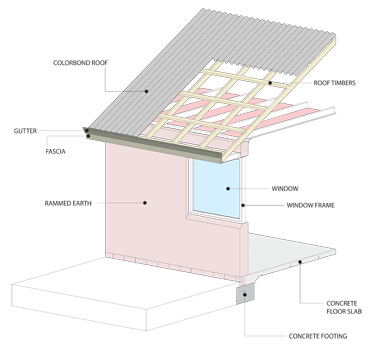
This is produced using a mix of soil and cement to obtain an impervious wall. It is built onsite, using formwork to hold the compacted material while it hardens. It is a single layer impervious wall. Although it sounds environmentally positive there are some real issues.
Because of the high level of mass and the direct contact with the external environment, stored heat or cold will be transmitted to the internal environment. Sun contact on a wall will heat the wall up and it will maintain the warmth. This will then be transmitted internally. An unsatisfactory outcome in summer.
It is common practice to provide weather protection by the use of verandahs. Like brick construction internally, it can moderate internal temperatures if used internally.
You may also like
Achieving Sustainable Living
Considering the environment and sustainability in your house design is something that will not only make your home feel great, but will also reduce your day to day running costs. A comprehensive way of achieving this is through correct orientation and by implementing a design that is solar passive. Ensuring ...
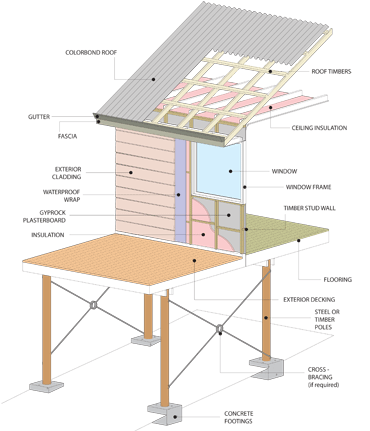
Pole or Stumped Homes
A solution for sloping land Pole or Stumped Homes is the combination of pole or stumps to support a deck providing the basis for framing. This could be the best solution for difficult sloping sites as it alleviates the issues for cut and fill, bunding and retaining. It can also ...
Tips to save water
Saving water, especially in summer is really important. Not only does it mean you care about the environment but you save on your bills! Here are some simple tips to try. 1. Turn off the tap when you are brushing your teeth 2. Check your toilet for leaks, this can save up ...