


Rammed Earth
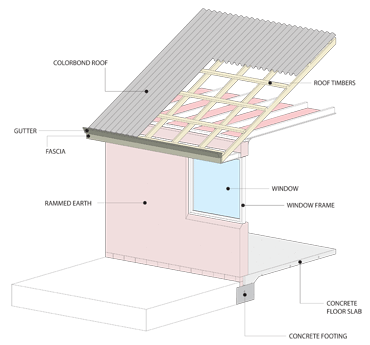
This is produced using a mix of soil and cement to obtain an impervious wall. It is built onsite, using formwork to hold the compacted material while it hardens. It is a single layer impervious wall. Although it sounds environmentally positive there are some real issues.
Because of the high level of mass and the direct contact with the external environment, stored heat or cold will be transmitted to the internal environment. Sun contact on a wall will heat the wall up and it will maintain the warmth. This will then be transmitted internally. An unsatisfactory outcome in summer.
It is common practice to provide weather protection by the use of verandahs. Like brick construction internally, it can moderate internal temperatures if used internally.
You may also like
Pole or Stumped Homes
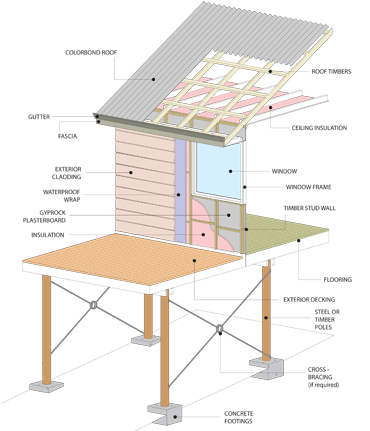
A solution for sloping land Pole or Stumped Homes is the combination of pole or stumps to support a deck providing the basis for framing. This could be the best solution for difficult sloping sites as it alleviates the issues for cut and fill, bunding and retaining. It can also ...
What does work-life balance look like?
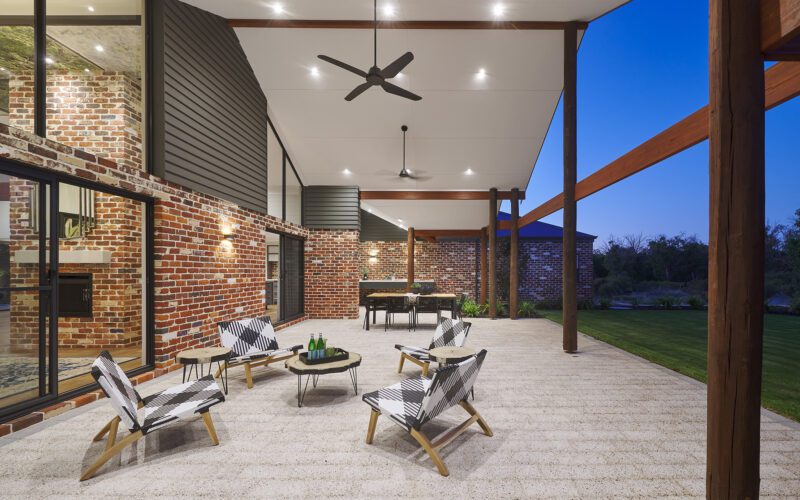
Less doing, more just being. Building a home in the country or by the coast is the perfect opportunity to define what a healthy work-life balance might look like for you. If 2020 got you thinking about re-balancing things, you’re not alone. As a result of the pandemic, more ...
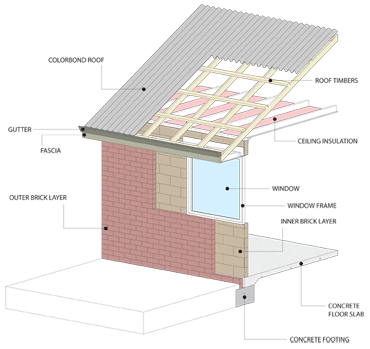
Double Clay Brick and Slab on Ground
Double Clay Brick and Slab on Ground is the most conventional method of construction in WA. There is a cavity between the outside layer of brick and the inside layer so that moisture doesn’t penetrate into the home. The external layer is either in a face brick or can ...