

Protecting your property from bushfires
Tips to protect your home
Bushfires are a serious risk in many parts of Western Australia, particularly in the warmer months. If you are living in or near bushland, it is important to protect your property from bushfires.
Here are some tips to protect your home this summer.
Prepare a bushfire survival plan
Developing a bushfire survival plan will help you take action and avoid making last minute decisions that could prove deadly during a bushfire.
A bushfire survival plan should apply to:
- Any house in an area with a history of bushfires
- Houses within a few block of bushland
- Properties not at direct risk that are situated near wilderness
- If you’d need to travel through bushland in order to escape
It is important to check and update your plan annually. Make sure all family members are familiar with the plan in the case that a fire approaches.
Maintain a fire protection zone
Here are some practical tips to reduce the risk of your home catching alight by simply maintaining your property to create a “protection zone” around you home:
- Clear away all leaf litter, long and dry grasses, and any thick undergrowth near your home
- Clear gutters of leaves and other flammable debris
- Install screens and shutters and keep them closed, so embers can’t enter your home
- Cover roof vents with wire mesh.
- Be aware of where and how flammable liquids are stored
- Find a place to move your BBQ and LPG cylinders in an emergency (never indoors)
- Avoid using gas in hot, windy condition
Make modifications to your home
You should prepare your home to survive a bushfire, even if your plan is to leave. A well-prepared and constructed house is more likely to survive a bushfire than an unprepared one.
Here are some tips on how to prepare your property:
- Protect underfloor spaces with non-combustible sheeting or metal flywire. This will prevent embers from lading under the house and starting small spot fires
- Cover all external vents with metal flywire
- Protect evaporative air conditioners with metal flywire screens
- Ensure any external timber cladding is regularly maintained and all gaps are sealed
- Install fencing made form non-combustible materials such as metal or brick
- Windows should have metal fly wire screens or shutters, and well maintained timber window frames
You may also like

Coastal Living
Shop the look: Shop the look here: Jonathan Adler day bed Poolside with Slim Aarons book Freedom Console Table Siesta Hammocks Macrame Hanging Chair Walker Zabriskie Furniture pillows Brown Jordan lounge chair and ottoman
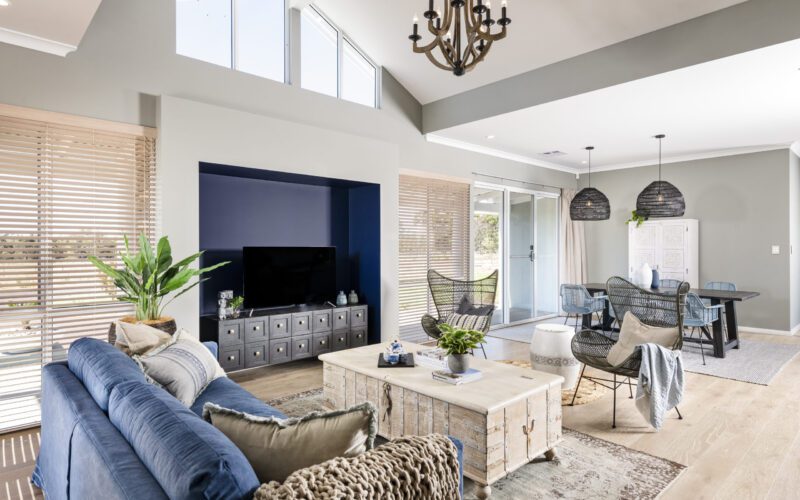
5 ways to add contrast to your rural home
Playing with juxtaposition can be fun and rewarding. Here are a few simple steps you can try to add contrast to your rural home. 1. Bring monochrome into the mix Black and white is the ultimate contrast which you can introduce into your home. You can do this by painting walls ...